Asthma Symptoms and Treatment 2026 – Early Signs, Asthma Attack Warning, Best Treatments & Management

Asthma is a chronic inflammatory condition of the airways that causes episodes of reversible airflow obstruction. In 2026, over 370 million people worldwide live with asthma, and it remains one of the most common long-term respiratory diseases.
The core problem is variable airway inflammation and hyperresponsiveness. Airways become swollen, produce excess mucus, and tighten in response to triggers. This leads to the classic symptoms of wheezing, shortness of breath, chest tightness, and coughing.
Symptoms vary widely because:
- Inflammation level fluctuates (viral infections, allergen exposure, stress)
- Triggers differ between individuals (pollen, cold air, exercise, smoke, pets, strong odors)
- Lung function naturally dips at night/early morning (circadian rhythm effect)
- Controller medication adherence or technique affects baseline control
- Comorbidities (allergic rhinitis, GERD, obesity, anxiety) amplify symptoms
Recognizing your personal pattern – when symptoms appear, what makes them worse, how quickly they respond to reliever – is the foundation of effective asthma treatment.
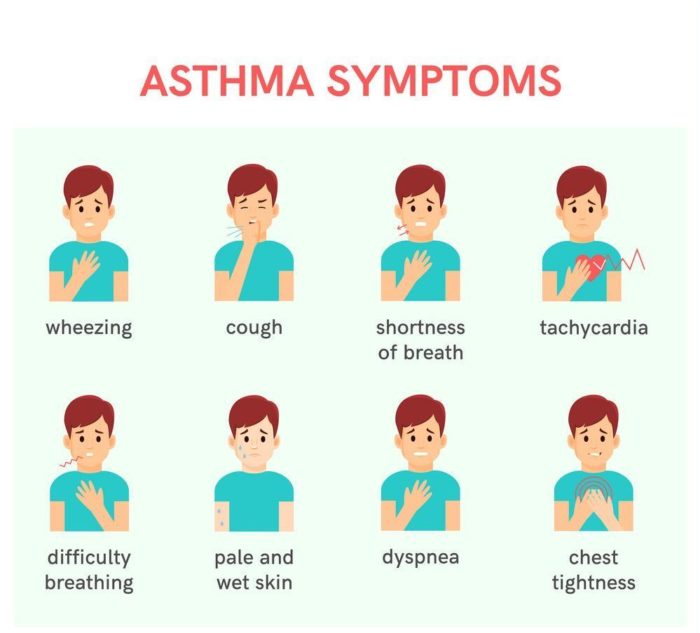
Most Common Asthma Symptoms Adults Experience
The four cardinal asthma symptoms in adults are:
- Wheezing – high-pitched whistling, usually louder on breathing out
- Shortness of breath – air hunger, feeling unable to take a full breath
- Chest tightness or pressure – band-like squeezing around the chest
- Cough – often dry, persistent, worse at night or early morning
Additional frequent complaints in 2026 clinical reports:
- Waking up coughing or breathless more than once a month
- Needing rescue inhaler more than twice a week
- Exercise limitation or prolonged recovery after physical activity
- Frequent “chest colds” that last longer than in other people
- Symptoms triggered reliably by cold air, laughing hard, strong smells, or irritants
Symptoms can range from occasional mild episodes to daily severe limitation. The key is noticing any increase in frequency, severity, or night-time occurrence – these are early red flags for poor control.
Asthma Attack – Early Warning Signs vs Severe Danger Signs
An asthma attack (acute exacerbation) occurs when airway inflammation and bronchospasm worsen rapidly.
Early warning signs (yellow zone – act quickly):
- Coughing more than usual, especially at night
- Increased shortness of breath during normal activities
- Needing reliever inhaler more often
- Peak flow dropping 15–30% below personal best
- Feeling tired, irritable, or “off”
Moderate attack (still manageable at home with prompt action):
- Wheezing audible at rest
- Difficulty speaking full sentences
- Using neck/chest muscles to breathe
- Peak flow 50–80% of personal best
Severe / life-threatening attack (go to emergency immediately):
- Unable to speak more than single words
- Very rapid breathing (>30 breaths/min in adults)
- Peak flow <50% of personal best
- Confusion, drowsiness, or exhaustion
- Blue lips/fingernails (cyanosis)
- Silent chest (severe airflow limitation – no air movement to produce wheeze)
Early recognition + aggressive reliever use prevents most attacks from becoming severe.
Current Asthma Treatment – Stepwise Approach in 2026 (GINA Strategy)

Asthma treatment follows a stepwise approach updated in the 2026 GINA report – the global gold standard.
Step 1 – Symptoms <2 days/week, no night waking As-needed low-dose ICS-formoterol (preferred) or SABA alone (less preferred)
Step 2 – Symptoms >2 days/week but not daily Low-dose maintenance ICS-formoterol + as-needed ICS-formoterol (MART) Alternative: low-dose ICS + as-needed SABA
Step 3 – Daily symptoms or frequent night waking Low-dose ICS-LABA maintenance + as-needed ICS-formoterol (MART preferred) Alternative: medium-dose ICS-LABA + as-needed SABA
Step 4 – Uncontrolled on Step 3 Medium/high-dose ICS-LABA + as-needed ICS-formoterol Add-on options: LAMA (tiotropium), LTRA (montelukast), low-dose OCS (short-term)
Step 5 – Severe asthma, uncontrolled on optimized Step 4 Add-on biologic therapy (omalizumab, mepolizumab, benralizumab, dupilumab, tezepelumab) Referral to severe asthma specialist center mandatory
MART (Maintenance and Reliever Therapy) using ICS-formoterol as both controller and reliever is now the dominant strategy for steps 3–5 in most adults and adolescents.
Quick-Relief Medications – Treating Asthma Attacks Effectively
Quick-relief (rescue) medications are used to reverse acute bronchospasm:
- Short-acting beta₂-agonists (SABA) – albuterol/salbutamol, levalbuterol (most common)
- ICS-formoterol combinations – budesonide-formoterol, beclomethasone-formoterol (preferred reliever in MART)
- Ipratropium bromide – short-acting muscarinic antagonist, added in moderate-severe attacks
- Systemic corticosteroids – prednisone/prednisolone 40–50 mg/day × 5–7 days for moderate-severe exacerbations
2026 key change: SABA monotherapy is strongly discouraged. Every time a reliever is needed, anti-inflammatory therapy (ICS) should be delivered at the same time to treat underlying inflammation.
Long-Term Controller Medications – Keeping Asthma Under Control
Controller medications reduce airway inflammation and prevent symptoms/exacerbations:
- Inhaled corticosteroids (ICS) – budesonide, fluticasone, beclomethasone, mometasone, ciclesonide
- Long-acting beta₂-agonists (LABA) – formoterol, salmeterol, vilanterol (never monotherapy)
- Long-acting muscarinic antagonists (LAMA) – tiotropium (add-on in steps 4–5)
- Leukotriene receptor antagonists (LTRA) – montelukast (add-on or mild persistent asthma)
- Biologic therapies for severe asthma (2026 approved options):
- Omalizumab – anti-IgE (allergic asthma)
- Mepolizumab, benralizumab, reslizumab – anti-IL-5/5Rα (eosinophilic asthma)
- Dupilumab – anti-IL-4Rα (type 2 inflammation)
- Tezepelumab – anti-TSLP (broad type 2 and non-type 2)
Biologics are life-changing for severe asthma patients uncontrolled on high-dose ICS-LABA + add-on therapy.
Building Your Personalized Asthma Action Plan
Every patient should have a written, individualized asthma action plan, reviewed at least annually.
Standard 3-zone format:
Green Zone (≥80% personal best peak flow / feeling good)
- Continue usual controller medication
- Reliever as needed
Yellow Zone (50–79% personal best / symptoms increasing)
- Increase reliever frequency (e.g., 4–8 puffs every 4 hours)
- Step up controller (double ICS dose or add extra doses of ICS-formoterol)
- Contact healthcare provider within 24–48 hours if no improvement
Red Zone (<50% personal best / severe symptoms)
- Take maximum reliever dose immediately
- Start oral corticosteroid burst (if pre-prescribed)
- Go to urgent care / emergency department right away
Include personal best peak flow, usual triggers, current medications, and emergency contacts.
Common Asthma Triggers in 2026 and Practical Ways to Reduce Them
Effective asthma treatment always includes trigger avoidance:
- House dust mites → allergen-proof mattress/pillow covers, weekly hot-water bedding wash (>55°C), HEPA vacuum
- Pet dander → keep pets out of bedroom, regular grooming, HEPA air purifier
- Pollen → keep windows closed on high-count days, shower after being outdoors
- Mold → fix water leaks, use dehumidifier (<50% humidity), clean bathrooms weekly
- Cockroach allergen → professional pest management, store food in sealed containers
- Viral respiratory infections → annual flu + COVID/RSV vaccination, hand hygiene, avoid sick contacts
- Cold/dry air → scarf over mouth/nose in winter, use reliever before going out
- Exercise → adequate warm-up, pre-exercise reliever if needed
- Tobacco smoke / vaping → complete avoidance (including second-hand)
- Strong odors / cleaning chemicals → fragrance-free products, good ventilation
Identifying personal triggers through symptom diary or allergy testing significantly improves control.
When to Go to the Emergency Room for an Asthma Attack

Seek emergency care immediately if:
- Severe shortness of breath at rest
- Unable to speak full sentences or only single words
- Lips/fingernails turning blue
- Confusion, drowsiness, or extreme fatigue
- No improvement after 10–15 minutes of intensive reliever use
- Peak flow <50% of personal best and not responding
Even if symptoms improve quickly after reliever, seek care after a severe attack – delayed worsening can occur.
Living Well with Asthma – Practical 2026 Self-Management Tips
With modern treatment most people with asthma lead full, active lives. Key self-management strategies:
- Take controller medication every day – even when feeling well
- Use a spacer with every metered-dose inhaler puff
- Check inhaler technique at every medical visit
- Carry reliever inhaler at all times
- Monitor symptoms and peak flow during viral season or high pollen
- Get annual influenza vaccine + stay current on pneumococcal, COVID, RSV vaccines
- Maintain healthy weight – obesity worsens asthma severity
- Manage stress – breathing exercises, yoga, mindfulness reduce exacerbations
- Use smart inhalers / apps for adherence reminders and attack prediction
- Join asthma education programs or online communities
Good control means: no night waking, no limitation of activities, reliever use ≤2 days/week, normal lung function.
Conclusion – Asthma Symptoms and Treatment in 2026
Asthma symptoms – wheezing, breathlessness, chest tightness, cough – are manageable when recognized early and treated properly.
In 2026, asthma treatment has never been more effective:
- ICS-formoterol as both controller and reliever (MART) is the preferred strategy for most adults/adolescents
- Biologics transform severe asthma for patients uncontrolled on conventional therapy
- Personalized action plans and trigger avoidance prevent most exacerbations
- Smart inhalers, digital monitoring, and telehealth improve adherence and outcomes
With correct diagnosis, guideline-based medication, education, and regular review, the large majority of people with asthma achieve excellent control and live without significant limitations.
If you have asthma symptoms or frequent attacks despite treatment, consult a healthcare provider – better control is almost always possible in 2026.
ADVERTISEMENT