
Energy Sector 2026 – Renewable Sources, Technology Impact & Future Importance

The energy sector in 2026 stands at a decisive turning point. Global electricity demand continues to surge, driven by AI data centers, widespread electrification, and industrial growth, while traditional fossil fuel dominance faces increasing pressure from policy, economics, and technology.
Renewable sources now form the backbone of new capacity additions worldwide. Solar and wind installations remain the fastest-growing segments, with many regions seeing renewables meet or exceed all incremental power demand. The keyword energy sector captures this dynamic shift toward cleaner, more resilient systems.
Key forces include falling costs for batteries and long-duration storage, rapid AI integration in grid management, and strong policy momentum in Asia and Europe despite uncertainties in some markets. The sector is moving from rapid deployment to sophisticated system integration, where renewables, storage, and digital tools create more flexible and affordable energy networks.
This transition promises lower emissions, greater energy security, and new economic opportunities while addressing affordability and reliability challenges in a high-demand world.
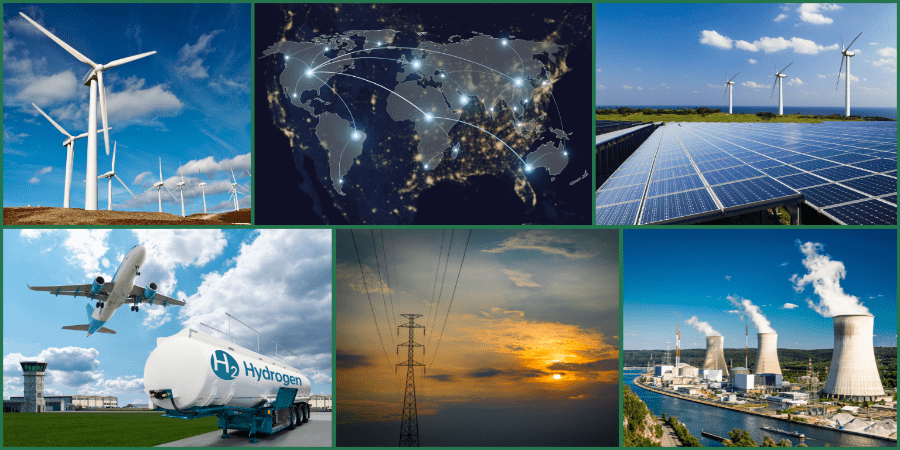
Energy from Renewable Sources – Dominating New Capacity in 2026
Energy from renewable sources leads global electricity expansion in 2026. Solar photovoltaic and onshore/offshore wind projects account for the majority of new generation additions across most markets.
China continues massive-scale deployment, while emerging economies in Asia, Africa, and Latin America accelerate adoption through competitive auctions and distributed systems. Europe maintains strong growth despite supply chain adjustments, and the United States sees robust additions in key states supported by corporate procurement.
Hybrid projects combining solar with battery storage become standard, enabling better matching of supply with demand. The rise of renewables pushes coal generation into structural decline in many regions, with natural gas serving as a transitional balancing fuel.
This shift improves energy independence, reduces fuel price volatility exposure, and supports industrial competitiveness through stable, low-cost power. Renewable energy sources now deliver electricity more affordably than new fossil plants in most locations worldwide.
Why Renewable Energy is Important for the Future
Why renewable energy is important for the future becomes clearer every year. In 2026, renewables deliver critical advantages across environmental, economic, and security dimensions.
They provide the fastest path to reducing greenhouse gas emissions from electricity generation, helping limit global temperature rise. Widespread adoption also cuts air pollution, improving public health in urban and industrial areas.
Economically, renewable energy sources offer price stability — once installed, solar and wind have zero fuel costs, shielding consumers and industries from volatile fossil fuel markets. This predictability supports long-term business planning and energy-intensive manufacturing.
Renewables enhance energy security by reducing dependence on imported fuels and diversifying supply. Distributed and local generation strengthens grid resilience against disruptions.
The sector creates high-quality jobs in manufacturing, installation, operations, and digital management. It drives innovation in storage, grid modernization, and smart systems, positioning economies for future competitiveness.
Ultimately, renewable energy is essential for building a sustainable, affordable, and resilient energy foundation that supports global development while protecting the planet.
Support for Renewable Energy – Policies and Market Drivers in 2026
Support for renewable energy remains robust in 2026 despite policy variations across regions. Many governments continue incentives through auctions, tax credits, and renewable portfolio standards.
Corporate procurement reaches record levels, with tech giants, manufacturers, and retailers signing long-term power purchase agreements for solar and wind. This demand pulls massive private investment into projects worldwide.
Falling technology costs make renewables the lowest-cost new-build option in most markets, driving organic growth even in less-supported regions. Battery storage integration enhances dispatchability, making renewables viable for baseload-like roles.
International collaboration and financing mechanisms accelerate deployment in developing economies. Green hydrogen and sustainable fuels gain momentum through policy and industrial commitments.
Public opinion and investor pressure further strengthen support, as companies align portfolios with net-zero goals. This combination of policy, market forces, and corporate action sustains renewable energy momentum in 2026.
Impact of Technology on Renewable Energy – Breakthroughs Driving Progress
The impact of technology on renewable energy has never been stronger than in 2026. Advances across multiple fields accelerate deployment, improve efficiency, and enhance system integration.
Solar cell efficiency continues rising with perovskite and tandem technologies pushing commercial modules beyond 25% in many applications. Bifacial and agrivoltaic designs maximize land use.
Wind turbines grow larger, with offshore models exceeding 15 MW capacity and floating platforms opening new deep-water areas. Next-generation blades and digital twins optimize performance.
Battery energy storage sees dramatic improvements in cycle life, density, and cost. Long-duration technologies like flow batteries and thermal storage begin scaling commercially.
Artificial intelligence and machine learning transform grid operations, forecasting, predictive maintenance, and virtual power plants. Smart inverters and edge computing enable distributed flexibility.
Hydrogen electrolyzer costs drop while efficiency rises, supporting industrial decarbonization. Digital platforms and blockchain improve trading and traceability of green energy.
These innovations make renewable energy more reliable, affordable, and scalable, reshaping the entire energy landscape.
Scholarly Articles on Renewable Energy – Key Insights from 2026 Research
Scholarly articles on renewable energy in 2026 provide deep analysis of technical, economic, and policy dimensions. Recent peer-reviewed studies highlight several critical areas.
Research on high-penetration grids demonstrates how diversified renewables plus storage and demand response maintain reliability without heavy fossil backup. Multiple papers model 80–100% renewable systems in regional contexts.
Techno-economic assessments show solar-plus-storage consistently undercutting new gas plants in cost per megawatt-hour across most markets. Studies quantify system-wide savings from faster renewable integration.
Policy analyses examine the effectiveness of carbon pricing, auctions, and corporate procurement in accelerating transition. Several articles evaluate the role of green industrial policies in supply chain resilience.
Social science research explores workforce transitions, community acceptance, and equitable access to clean energy benefits. Papers address just transition frameworks in coal-dependent regions.
Emerging technology reviews cover perovskite stability, solid-state batteries, and advanced geothermal systems. These scholarly contributions inform both policy makers and industry leaders shaping the sector’s future.
New Renewable Energy Technology – Breakthroughs to Watch in 2026
New renewable energy technology in 2026 brings several exciting advances closer to commercialization.
Perovskite-silicon tandem solar cells achieve laboratory efficiencies above 33%, with pilot production lines scaling rapidly. Commercial modules nearing 28% efficiency promise higher output per area.
Advanced wind designs include airborne systems and larger offshore rotors exceeding 18 MW. Floating platforms with dynamic cabling open vast deep-water resources.
Long-duration energy storage sees breakthroughs in iron-air batteries, compressed air, and thermal systems offering 100+ hours of discharge at competitive costs.
Green hydrogen electrolyzers drop below $400/kW in leading projects, with high-temperature solid-oxide versions improving efficiency significantly.
AI-optimized grids use predictive analytics and autonomous controls to integrate massive variable renewable input while minimizing curtailment.
Carbon capture integrated with bioenergy (BECCS) and direct air capture projects scale, providing negative emissions pathways.
These new technologies strengthen the case for accelerated renewable deployment, making deep decarbonization more technically and economically feasible.
ADVERTISEMENT